


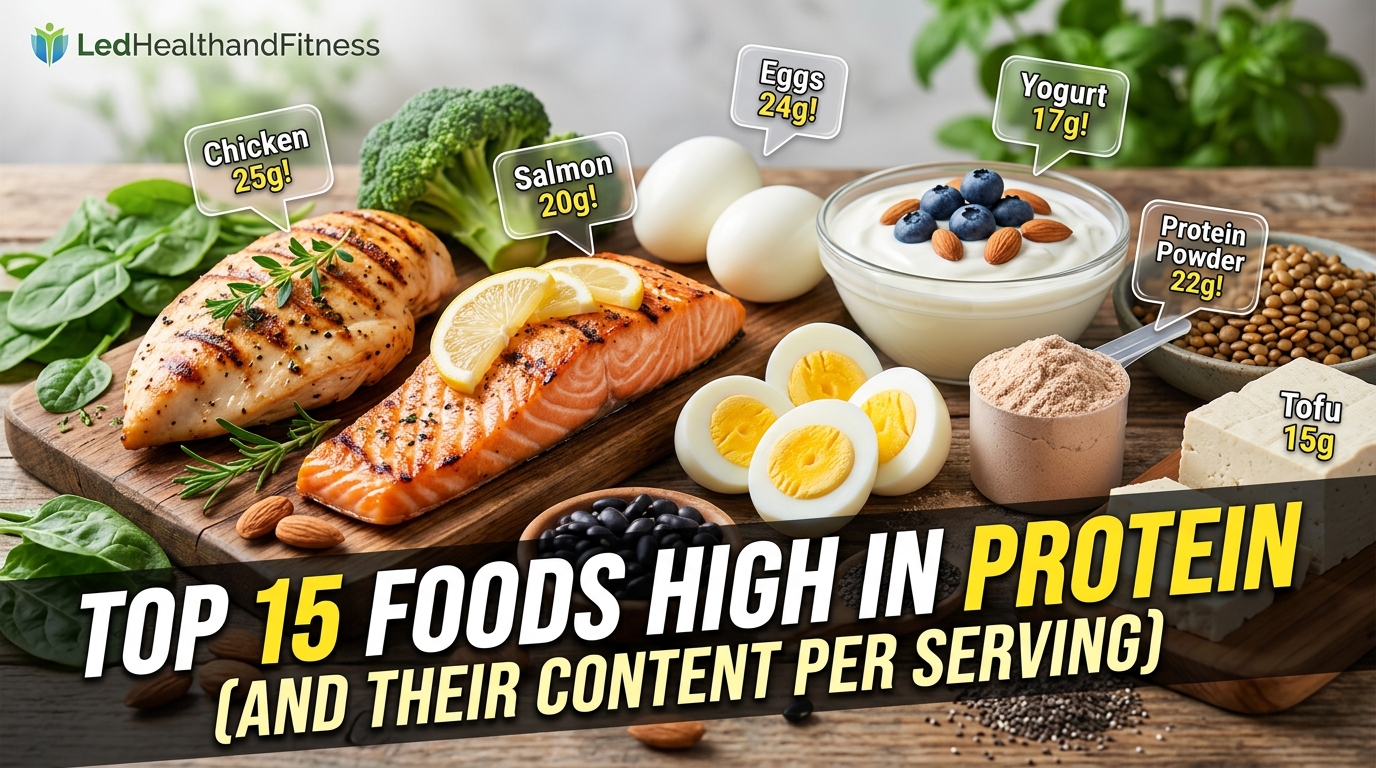

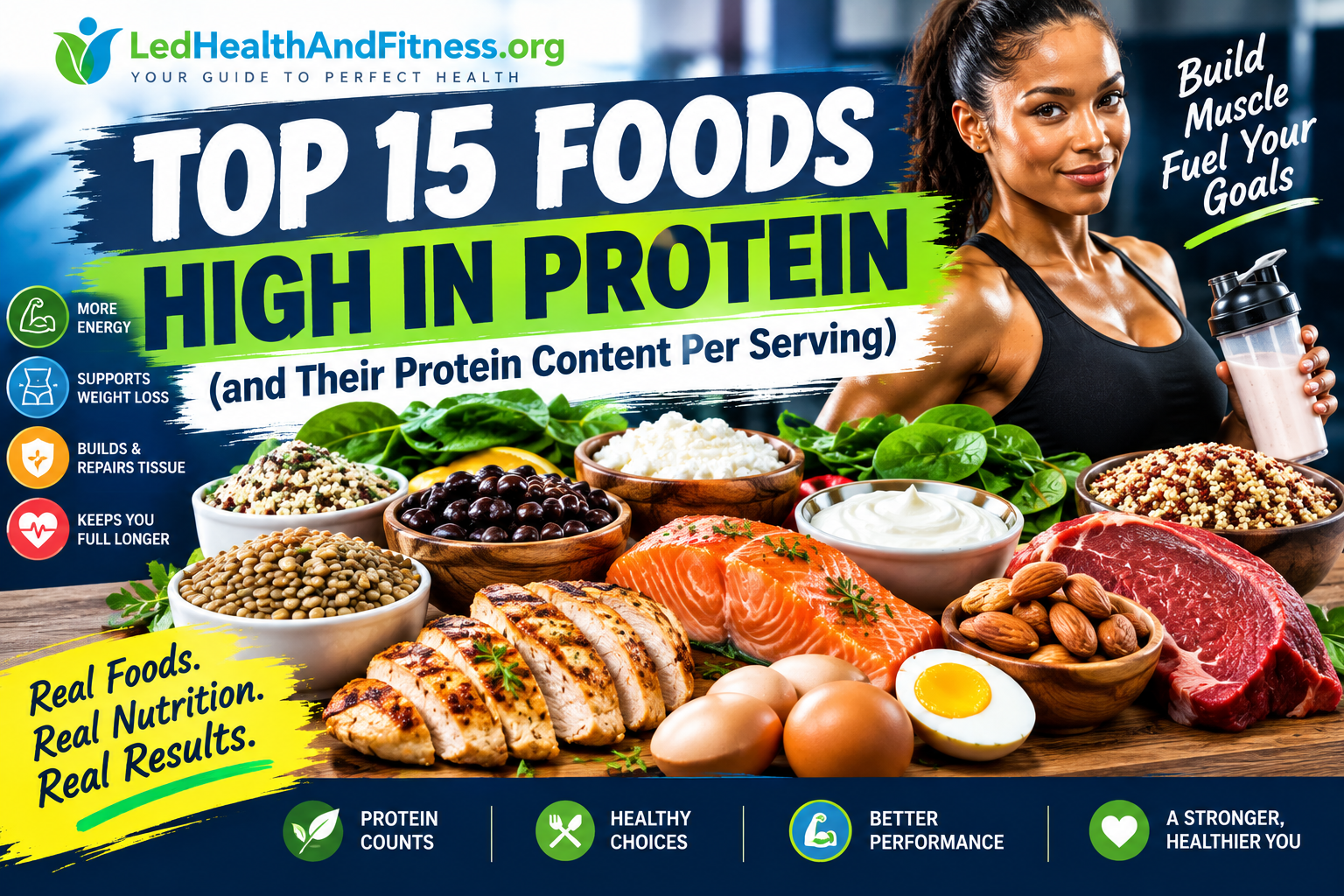
Whether you’re trying to build muscle, lose fat, or simply stay fuller for longer, knowing which foods to reach for makes all the difference. This guide to the top 15 foods high in protein breaks down exactly how much protein you’re getting per serving, so you can plan meals with real numbers instead of guesswork. From lean meats and seafood to eggs, dairy, and plant-based options, this list of the top 15 foods high in protein covers something for every diet — whether you eat meat, fish only, or nothing that has a face at all.
Why Protein Matters
Protein is essential for building and repairing muscle, supporting a healthy immune system, producing hormones and enzymes, and keeping you satisfied after meals. Most adults need roughly 0.8g of protein per kilogram of body weight daily just to meet baseline needs, while people who train regularly or are trying to build muscle often aim higher — closer to 1.6–2.2g per kilogram. That’s exactly why having a go-to list of the top 15 foods high in protein is so useful: it takes the guesswork out of hitting your number every day.
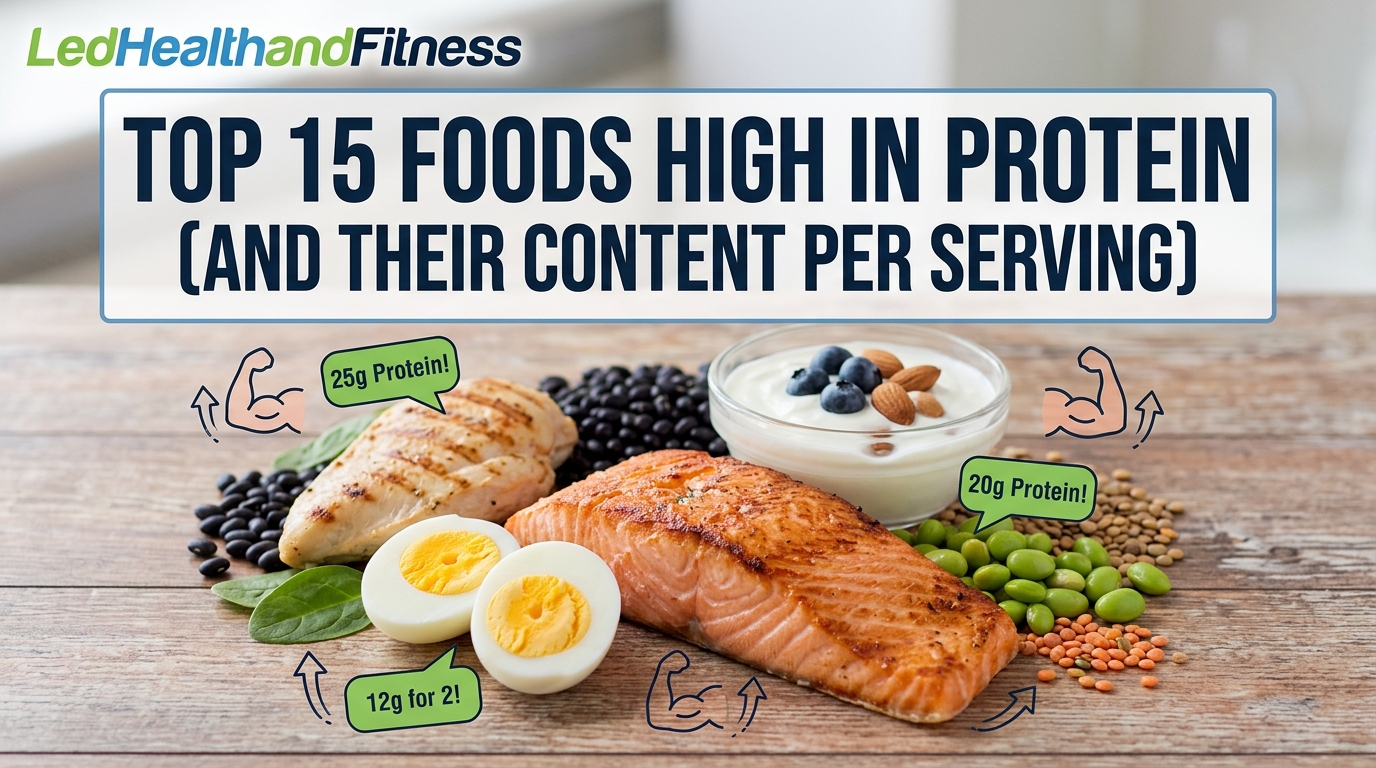
The Top 15 Foods High in Protein (Ranked by Protein Per Serving)
Below is our breakdown of the top 15 foods high in protein, with the approximate protein content per standard serving. Actual values can vary slightly depending on brand, cut, and preparation method, so treat these as reliable estimates rather than exact lab measurements.
1. Chicken Breast — 31g per 3.5oz (100g), cooked
Preparation: Values are for skinless, boneless chicken breast that’s been grilled, baked, or poached without breading. Cooking method matters less for protein content than you’d think, but frying with a breaded coating adds carbs and fat without adding protein, so grilling, baking, or air-frying keeps the protein-to-calorie ratio highest. Raw chicken breast has a similar protein content by weight, but cooked weight is what most nutrition labels and trackers reference since cooking causes some moisture loss. Chicken breast is the poster child of high-protein eating for good reason — it’s lean, versatile, and delivers more protein per calorie than almost any other whole food.
2. Turkey Breast — 29g per 3.5oz (100g), cooked
Preparation: This figure applies to roasted or grilled turkey breast, not deli-style processed turkey slices, which are often lower in protein per gram due to added water and fillers. Ground turkey (93% lean) comes in slightly lower, around 22–24g per 100g cooked, because it retains more fat. Turkey breast is nearly as protein-dense as chicken and offers a nice change of pace for meal prep, sandwiches, or ground turkey dishes.
3. Tuna — 26g per 3.5oz (100g), canned in water
Preparation: This value is specifically for canned light or albacore tuna packed in water and drained — canned tuna packed in oil has a similar protein count but significantly more calories from the added oil, so draining well matters if you’re watching calories. Fresh, raw tuna (like sushi-grade ahi) has a comparable protein content per 100g, but canned tuna is the more practical everyday option since it requires no cooking. Canned tuna is one of the most convenient high-protein foods around — no cooking required, and it’s an easy way to add lean protein to salads or wraps.
4. Lean Beef (Sirloin) — 26g per 3.5oz (100g), cooked
Preparation: This applies to lean cuts like sirloin, top round, or 93%+ lean ground beef, grilled or pan-seared without excess added fat. Fattier cuts (like ribeye or 80% lean ground beef) still deliver strong protein but with a higher calorie and saturated fat load per serving. Cooking beef well-done versus medium doesn’t meaningfully change protein content, though well-done meat loses more moisture, which slightly concentrates the protein by weight. Lean cuts of beef pack in a serious amount of protein along with iron, zinc, and B12 — nutrients that plant-based proteins often lack.
5. Salmon — 25g per 3.5oz (100g), cooked
Preparation: This figure is for wild or farmed salmon that’s been baked, grilled, or pan-seared with skin removed or on. Smoked salmon (lox) has a slightly different protein profile — around 18–20g per 100g — because of the curing process, and it’s much higher in sodium. Canned salmon is a budget-friendly alternative with a comparable protein content to fresh, cooked fillets. Salmon combines a strong protein content with heart-healthy omega-3 fatty acids, making it one of the best all-around choices on this list.
6. Cottage Cheese — 25g per 1 cup (226g)
Preparation: This value applies to low-fat (1–2%) cottage cheese, which is the most common variety on nutrition labels. Full-fat cottage cheese has a very similar protein count but more calories from fat, while fat-free versions are nearly identical in protein too — the fat content mostly just affects calories and texture, not protein. No cooking is required; cottage cheese is eaten straight from the container, often paired with fruit or savory toppings. Cottage cheese is an underrated high-protein food — a single cup delivers as much protein as many meat servings, plus it’s rich in slow-digesting casein protein that keeps you full for hours.
7. Shrimp — 24g per 3.5oz (100g), cooked
Preparation: This is for peeled, deveined shrimp that’s been boiled, steamed, or sautéed without heavy breading. Breaded or fried shrimp (like popcorn shrimp) has a noticeably lower protein-to-calorie ratio because of the batter. Raw shrimp has a slightly lower protein value per 100g than cooked, since cooking reduces water content and concentrates the protein by weight. Shrimp is extremely lean and protein-dense, with very few calories per serving, making it a favorite for anyone tracking macros closely.
8. Lentils — 18g per 1 cup, cooked
Preparation: This applies to lentils (brown, green, or red) that have been simmered in water or broth without added fat, which is the standard way they’re measured on nutrition labels. Dry, uncooked lentils have a much higher protein value per cup since they haven’t absorbed water yet, but that’s not a realistic serving size — always compare cooked-to-cooked when checking labels. Canned lentils are pre-cooked and have a very similar protein content to home-cooked, just with added sodium from the canning liquid. Lentils are one of the best plant-based protein sources available, and they bring fiber, iron, and folate along for the ride.
9. Greek Yogurt — 17g per 6oz (170g) container
Preparation: This figure is for plain, unsweetened Greek yogurt (2% or nonfat). Flavored or sweetened varieties often have a similar protein content but with significant added sugar, so plain is the better choice if you’re optimizing for protein density. Regular (non-Greek) yogurt has roughly half the protein of Greek yogurt for the same serving size, because Greek yogurt is strained to remove excess whey and liquid, which concentrates the protein. No preparation is needed — it’s ready to eat straight from the container.
10. Edamame — 17g per 1 cup, cooked
Preparation: This is for shelled edamame that’s been boiled or steamed, which is the most common preparation method (usually sold frozen and cooked quickly at home). In-shell edamame has the same protein content in the beans themselves, but you’re eating less by volume since the pods aren’t edible. These young soybeans are a complete plant protein, meaning they contain all nine essential amino acids — a rarity among plant foods.
11. Eggs — 12g per 2 large eggs
Preparation: This value holds true whether eggs are boiled, poached, scrambled, or fried, since cooking method doesn’t meaningfully change the protein content — only added ingredients like cheese, butter, or oil change the overall calorie count. Raw eggs technically contain the same protein, but cooking improves protein digestibility and eliminates food-safety risk, so cooked is the practical choice. Egg whites alone contain about 3.6g of protein per large egg, with almost none of the fat, if you’re looking to separate whites from yolks. Eggs are one of the most bioavailable protein sources on the planet, meaning your body absorbs and uses the protein extremely efficiently.
12. Chickpeas — 15g per 1 cup, cooked
Preparation: This applies to chickpeas that have been boiled from dry or rinsed and heated from a can. Canned chickpeas have a very similar protein content to home-cooked dried chickpeas, just with added sodium unless you buy a low-sodium or no-salt-added version. Roasted chickpeas (a popular crunchy snack) retain a similar protein content per weight, though the serving size by volume is smaller once roasted, since they shrink and dry out. Chickpeas are a fiber-and-protein combo that works in everything from hummus to curries to roasted snacks.
13. Black Beans — 15g per 1 cup, cooked
Preparation: This figure is for black beans simmered from dry or heated from a can and drained. Canned black beans are nutritionally very close to dried beans cooked at home, so there’s no meaningful protein trade-off for choosing convenience — just rinse them to cut down on added sodium. Black beans bring a hearty dose of plant protein along with resistant starch, which supports gut health and blood sugar control.
14. Tofu — 10g per 1/2 cup (126g), firm
Preparation: This value is for firm or extra-firm tofu, which has a higher protein density than silken or soft tofu because it contains less water. Silken tofu comes in lower, around 6–7g per 1/2 cup, making it better suited for smoothies or sauces than as a standalone protein source. Tofu can be baked, pan-fried, grilled, or added raw to dishes — the cooking method doesn’t change the protein content, only the texture and how well it absorbs marinades. Tofu is a soy-based staple that absorbs whatever flavors you cook it with, making it one of the most versatile plant proteins for high-protein meals.
15. Quinoa — 8g per 1 cup, cooked
Preparation: This applies to quinoa simmered in water or broth, which is the standard preparation (roughly a 2:1 liquid-to-quinoa ratio). Dry, uncooked quinoa has a much higher protein value per cup, but again, cooked-to-cooked is the fair comparison since quinoa roughly triples in volume once cooked. All quinoa varieties — white, red, or black — have essentially the same protein content; the differences are mostly in texture and flavor. Quinoa rounds out the list as a complete-protein grain alternative, delivering all nine essential amino acids along with fiber and micronutrients that refined grains lack.
How to Use This List of the Top 15 Foods High in Protein
The easiest way to put this top 15 foods high in protein list to work is to build each meal around at least one item from it. For example: eggs or Greek yogurt at breakfast, chicken breast or lentils at lunch, and salmon or tofu at dinner, with cottage cheese or edamame as a protein-packed snack in between. Mixing animal and plant sources also broadens your amino acid profile and adds variety to your diet, which makes hitting your daily protein target far easier to sustain long term.
Final Thoughts
Protein doesn’t have to come from the same three foods on repeat. With this list of the top 15 foods high in protein, you’ve got options across meat, seafood, dairy, eggs, legumes, and plant-based staples — enough variety to build satisfying, protein-rich meals every day of the week without getting bored.
Disclaimer: Protein values are approximate and can vary based on preparation method, brand, and specific cut or variety. This article is for general informational purposes and is not a substitute for personalized nutrition advice from a registered dietitian or healthcare professional.
What do you feel about this post?

Like

Love

Happy

Haha

Sad