

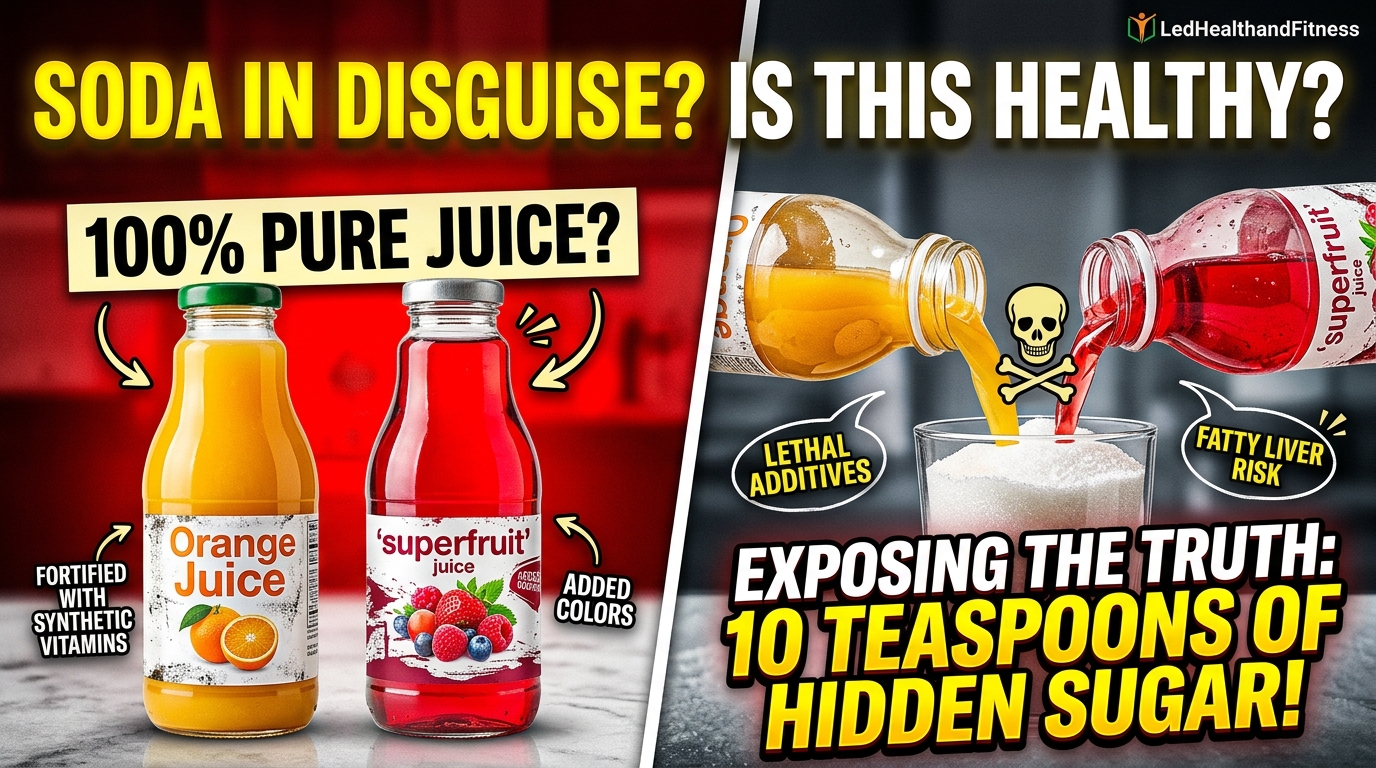


For decades, a glass of orange or apple juice has been positioned as an essential element of a wholesome morning routine. Brightly colored cartons emblazoned with promises like “100% Pure Juice,”“No Added Sugar,” and “Fortified with Daily Vitamin C” convince millions of consumers that they are pouring pure liquid vitality into their glasses.
This leads us to a critical nutritional question: is 100 percent fruit juice healthy, or is it simply soda in disguise?
When you evaluate how store-bought fruit juice is manufactured, processed, and processed by your liver, a very different picture emerges. At LedHealthandFitness, we expose the truth about packaged foods so you can make empowered choices to reach your health and fitness goals.
1. The Fructose Trap: Unbuffered Liquid Sugar
The primary reason why answers to “is 100 percent fruit juice healthy?” skew negative among nutritionists comes down to one element: dietary fiber.
Whole fruit naturally contains fructose alongside a complex matrix of insoluble and soluble fiber. This structural fiber acts as a natural brake, slowing digestion and ensuring a steady, controlled release of sugar into your bloodstream. When fruit is commercially juiced, 100% of that protective fiber is removed.
Without fiber to buffer absorption, fruit juice delivers a massive, immediate surge of liquid fructose straight to your digestive system.
- Equal Sugar to Soda: A single 12-ounce glass of 100% apple or orange juice delivers roughly 30 to 36 grams of sugar—matching or exceeding the sugar content of a standard can of regular cola.
- Metabolic Strain: Consuming high-dose liquid fructose forces your liver to process sugar rapidly. Over time, this rapid uptake can contribute to insulin resistance, elevated blood triglycerides, abdominal fat storage, and non-alcoholic fatty liver disease (NAFLD).
2. Added Synthetic Vitamins: A Clever Marketing Illusion
To convince consumers that fruit juice is a health food, manufacturers frequently highlight added nutrients on the front of the box (e.g., “Contains 100% Daily Value of Vitamin C” or “Fortified with Calcium”).
What labels rarely disclose is that these are usually synthetic vitamin isolates injected long after the real fruit has been processed.
During commercial production, squeezed juice is routinely stored in massive, oxygen-depleted holding tanks for up to 12 months to allow year-round distribution. This industrial storage strips out natural flavors and destroys delicate, heat-sensitive micro-nutrients like organic Vitamin C. To compensate, manufacturers fortify the product with lab-synthesized substitutes (like isolated ascorbic acid).
Unlike whole fruit nutrients—which exist alongside bioflavonoids, natural enzymes, and mineral co-factors—synthetic isolates are far less bioavailable and do not offer the same holistic health benefits.
3. “Flavor Packs” and Hidden Chemical Engineering
If juice is stripped of oxygen and sealed in tanks for up to a full year, why does every glass taste uniform and fresh when you open the carton?
The answer lies in flavor packs.
Because stripping oxygen removes natural flavors along with oxygen, juice conglomerates partner with flavor and fragrance houses to engineer chemical flavor profiles. These packs are concocted from natural fruit byproducts, but they are heavily processed to standardize the flavor profile of specific brands.
Because these flavor packs are technically derived from fruit essences, federal labeling guidelines do not require companies to list them individually on the ingredient deck. That “100% natural” flavor is often a product of laboratory engineering, not nature.
4. Harmful Additives and Dyes to Avoid
While pure fruit juices rely on flavor packs and sugar concentration, popular products labeled as “100% Juice Blends” or “Made with 100% Real Juice” frequently introduce additives and synthetic compounds that can be harmful when consumed in large amounts over time.
+------------------------+---------------------------------------+-------------------------------------------------+
| Common Additive        | Primary Function in Juice Blends      | Potential Health Risks in Large Quantities      |
+------------------------+---------------------------------------+-------------------------------------------------+
| Red 40 & Yellow 6      | Enhances color vibrancy in red/orange | Linked to hyperactivity and allergic reactions  |
| Sodium Benzoate        | Preservative used to extend shelf life| Potential formation of benzene (a carcinogen)   |
| Potassium Sorbate      | Inhibits mold, yeast, and fungi growth| Can cause gut irritation and inflammation       |
| Caramel Color (Class IV)| Standardizes dark tints in grape/apple| May contain 4-MEI, a chemical byproduct link    |
+------------------------+---------------------------------------+-------------------------------------------------+
The Benzene Hazard
A major additive concern occurs when the chemical preservative sodium benzoate is combined with ascorbic acid (Vitamin C) in liquid beverages. When exposed to heat or light over time, these two compounds can react together to form benzene—a known human carcinogen.
Whole Fruit vs. 100% Store-Bought Fruit Juice
+--------------------+------------------------------------+------------------------------------+
| Nutritional Marker | Whole Fresh Fruit                  | Store-Bought 100% Fruit Juice      |
+--------------------+------------------------------------+------------------------------------+
| Dietary Fiber      | Intact (Prevents sugar spikes)     | Stripped (Triggers rapid spikes)   |
| Fullness / Satiety | High (Requires chewing)            | Low (Easy to over-consume calories)|
| Nutrient Quality   | Bioavailable, whole food vitamins  | Synthetic vitamins added back in   |
| Glycemic Load      | Low to moderate                    | Exceptionally high                 |
+--------------------+------------------------------------+------------------------------------+
Healthy, Whole-Food Alternatives
You don’t need to sacrifice refreshing drinks to maintain optimal health. Consider swapping packaged juice for these nutrient-dense alternatives:
- Eat Whole Fresh Fruit: Eat whole oranges, berries, and apples to consume live enzymes, full-spectrum vitamins, and intact fiber.
- Fruit-Infused Water: Add sliced lemons, cucumbers, limes, or berries to cold water for a low-calorie, zero-sugar refreshing beverage.
- Whole Fiber Green Smoothies: Blend whole fruits alongside leafy greens (like spinach or kale) and a clean protein powder. Blending retains the essential plant fiber, helping moderate blood sugar response.
Conclusion
So, is 100 percent fruit juice healthy? The short answer is no. Stripped of fiber, rich in concentrated fructose, engineered with chemical flavor packs, and fortified with synthetic additives, packaged fruit juice operates far more like soft drinks in the human body than actual fresh fruit.
At LedHealthandFitness, we advocate for whole-food nutrition that fuels sustained energy and longevity. Replace packaged juices with whole fruit and pure water to keep your blood sugar balanced, protect your liver, and accelerate your fitness progress.
What do you feel about this post?

Like

Love

Happy

Haha

Sad