

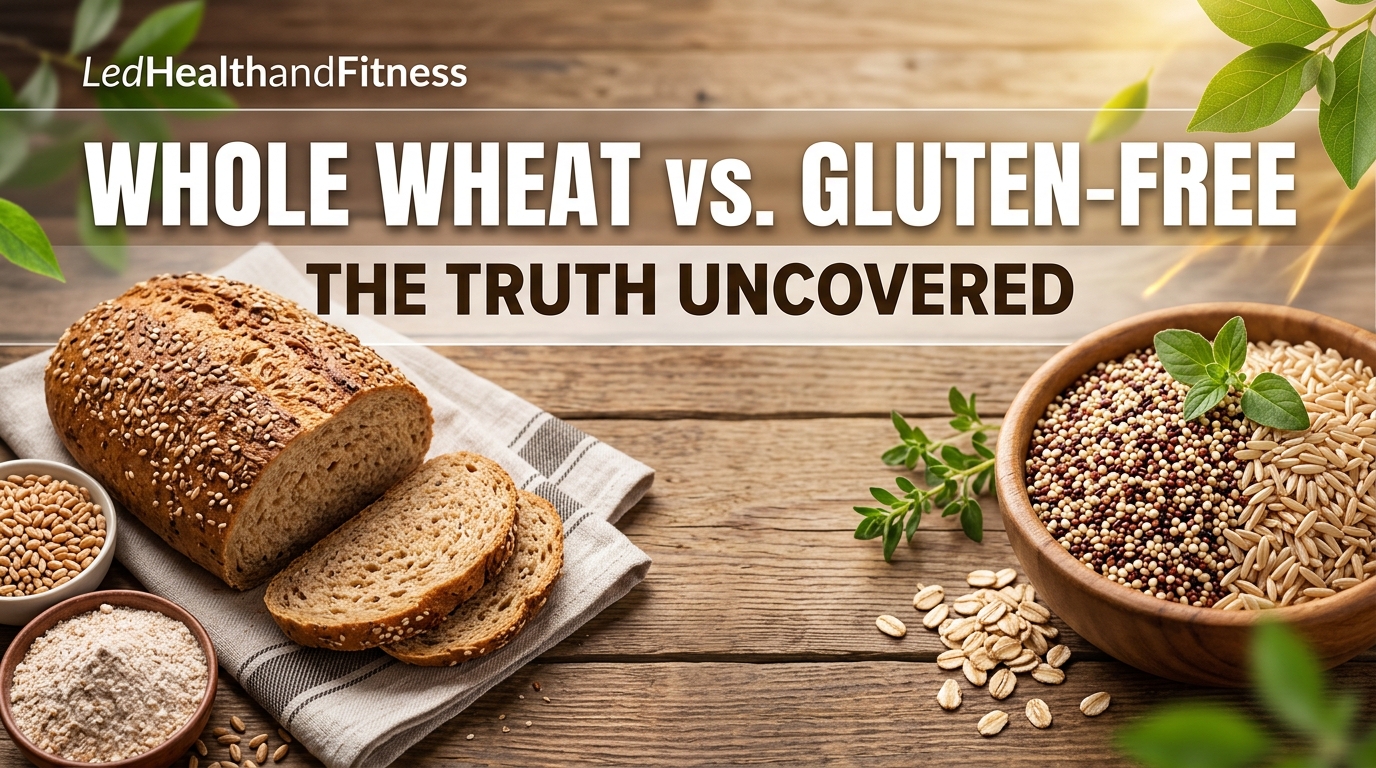




If you’ve walked down the grocery store aisles recently, you’ve likely noticed the explosive growth of gluten-free products. From breads and pastas to snacks and baking mixes, “gluten-free” is often marketed as the ultimate upgrade for your diet. On the other shelf stands whole wheat—a long-standing, traditional staple recommended by nutritionists for decades.
This leads to a common debate: in the battle of gluten free vs whole wheat, which option is truly healthier? Is cutting out gluten a mandatory move for fitness and wellness, or are you missing out on vital nutrients by skipping whole grains?
At LedHealthandFitness, we break down the science to help you make informed decisions about what fuels your body. Let’s look closely at how these two dietary choices compare.
Understanding the Basics
To compare these options fairly, it helps to understand what each term actually means.
- Whole Wheat: Refers to grains that retain all three parts of the seed kernel—the bran, endosperm, and germ. Because the whole grain remains intact, it retains its natural fiber, vitamins, and minerals. Whole wheat naturally contains gluten, a protein that gives baked goods their characteristic stretch and chewiness.
- Gluten-Free: Refers to foods naturally devoid of gluten, or processed foods made with alternative grains and starches (like rice flour, tapioca starch, almond flour, or potato starch). “Gluten-free” is a structural label indicating the absence of a specific protein, not automatically a nutritional label meaning “low-calorie” or “healthy”.
Nutritional Breakdown: Gluten Free vs Whole Wheat
When you place processed gluten-free products next to 100% whole wheat, several distinct nutritional differences stand out.
+------------------+----------------------------------+------------------------------------+
| Nutritional Feature | 100% Whole Wheat               | Standard Gluten-Free Alternatives |
+------------------+----------------------------------+------------------------------------+
| Primary Protein  | Gluten (Naturally high)         | Varies (Often lower)               |
| Dietary Fiber    | High (Bran intact)               | Typically lower (Refined starches) |
| Micronutrients   | Rich in B-Vitamins, Iron, Zinc   | Often requires fortification       |
| Glycemic Impact  | Steady, slow energy release      | Often higher spike in blood sugar  |
| Additives        | Minimal in whole-grain options   | Extra gums/binders for texture     |
+------------------+----------------------------------+------------------------------------+
1. Dietary Fiber & Digestion
Whole wheat is a powerhouse of insoluble and soluble fiber. Fiber aids in smooth digestion, supports gut health, keeps you feeling full longer, and helps regulate blood sugar.
In contrast, many commercial gluten-free alternatives rely heavily on refined starches like white rice flour or tapioca starch. These starches lack the fibrous outer shell of the grain, resulting in significantly lower fiber content per serving unless whole gluten-free grains (like quinoa or buckwheat) are specifically used.
2. Micronutrient Density
Because whole wheat retains the germ and bran, it naturally delivers B-vitamins, iron, magnesium, and selenium. Many gluten-free replacement foods, on the other hand, are made from refined starches that aren’t always fortified with essential vitamins and minerals, potentially leading to nutrient gaps if not carefully balanced.
3. Ingredients and Additives
Without gluten, baked goods lack elasticity and moisture. To replicate the light, chewy texture of traditional bread, manufacturers of gluten-free products often add extra sugar, fats, and hydrocolloid gums (like xanthan gum or guar gum). Consequently, a gluten-free slice of bread can sometimes end up being higher in calories and carbohydrates than its whole wheat counterpart.
Who Needs Gluten-Free?
Going gluten-free isn’t just a lifestyle trend for everyone; for some, it is a medical necessity.
- Celiac Disease: An autoimmune condition where consuming gluten triggers immune responses that damage the lining of the small intestine. For those diagnosed with celiac disease, a 100% gluten-free diet is essential.
- Non-Celiac Gluten Sensitivity (NCGS): Individuals who do not test positive for celiac disease but still experience digestive issues, brain fog, joint pain, or fatigue when consuming wheat benefit greatly from eliminating gluten.
- Wheat Allergies: People with a specific allergic response to proteins found in wheat must avoid whole wheat products completely.
If you don’t fall into these medical categories, eliminating gluten doesn’t automatically grant health benefits.
The Verdict: Which Should You Choose?
When comparing gluten free vs whole wheat, there is no single answer for everyone—it depends on your body’s specific needs:
- Choose Whole Wheat if: You have no medical issues with gluten, want to maximize your daily fiber intake, require sustained energy for athletic training, and prefer nutrient-rich, minimally processed whole grains.
- Choose Gluten-Free if: You have celiac disease, a wheat allergy, or a non-celiac sensitivity. To keep it healthy, focus on naturally gluten-free whole foods (quinoa, brown rice, oats, sweet potatoes, and amaranth) rather than heavily processed packaged substitutes.
Conclusion
In the battle of gluten free vs whole wheat, whole wheat remains the more nutrient-dense option for the average, healthy individual thanks to its high fiber, protein, and natural micronutrient profile. While a gluten-free diet is vital for those with celiac disease or sensitivities, simply swapping whole wheat for processed gluten-free products won’t automatically improve your health or aid weight loss.
At LedHealthandFitness, we believe nutrition should always be tailored to your body’s needs. Focus on unrefined, whole foods—whether they contain gluten or not—to hit your fitness goals and feel your best every day.
What do you feel about this post?

Like

Love

Happy

Haha

Sad