

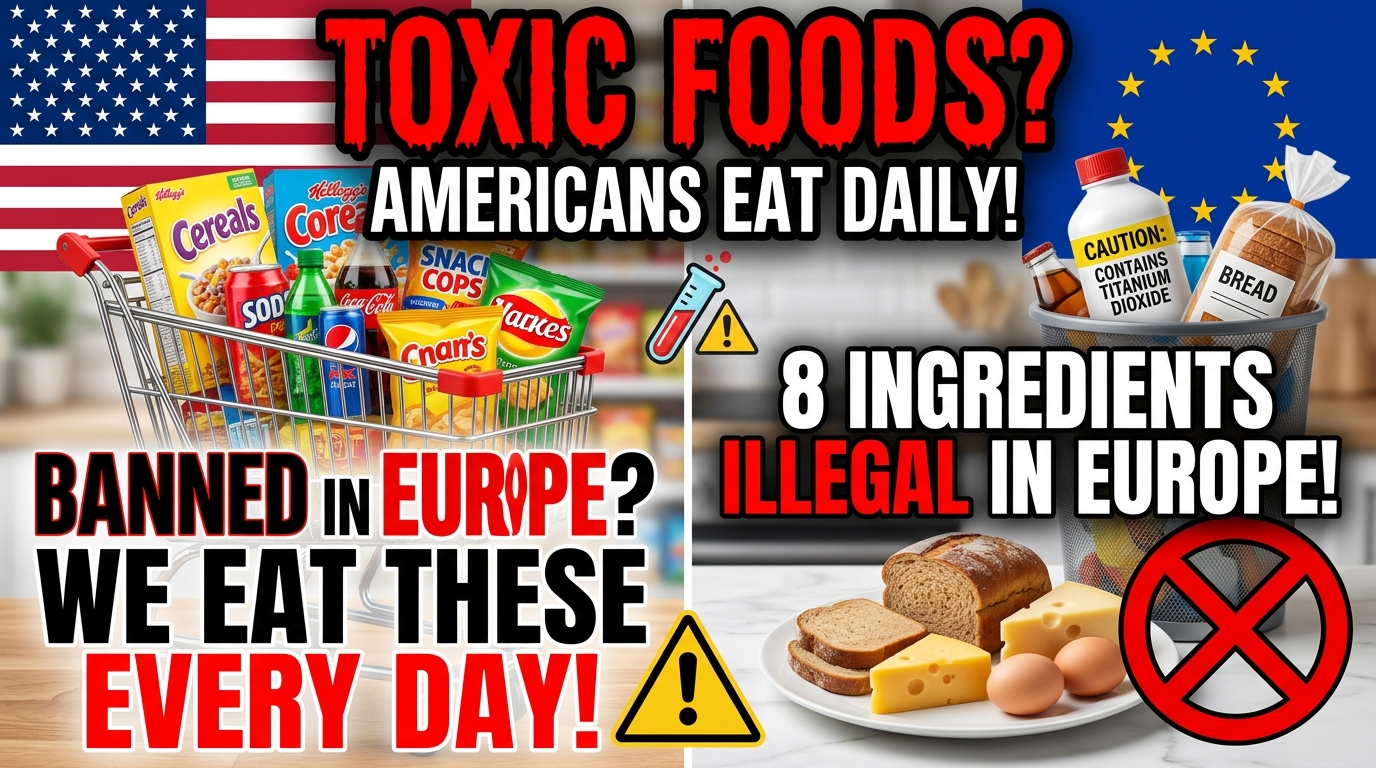

Imagine purchasing your favorite box of cereal, loaf of bread, or bag of chips in London or Paris. Now imagine taking that exact same brand name product off a grocery store shelf in America.
Even though the box might look almost identical on the front, the ingredients inside can be radically different. In fact, dozens of chemical ingredients, synthetic dyes, and dough conditioners served daily in American homes are completely illegal across the European Union.
Why are these chemical ingredients permitted in one country while strictly forbidden in others? And more importantly, what are these additives doing to your long-term health?
At LedHealthandFitness, we break down the stark contrast in food safety regulations so you can protect your body, audit your pantry, and choose whole, unrefined foods that fuel peak vitality.
Why Is the EU’s Food Safety Standard So Different?
The massive gap between European and American food standards comes down to a fundamental difference in regulatory philosophy:
- The EU follows the Precautionary Principle: If an ingredient shows potential risk to human or environmental health in scientific studies, European regulators restrict or ban it until it is proven safe.
- The US FDA follows a Reactive Approach: Additives are generally approved or grandfathered in as “Generally Recognized as Safe” (GRAS) unless overwhelming, conclusive evidence forces a post-market restriction.
Because of this divide, food manufacturers routinely alter their recipes—using clean, natural ingredients for European consumers while continuing to use cheap, industrial chemicals in products sold across North America.
Here are 8 of the most controversial food additives banned in the EU that remain legal and widely used in the US today.
1. Potassium Bromate (The Carcinogenic Bread Chemical)
- What It Is: A powerful chemical flour improver used to strengthen dough, speed up baking times, and produce fluffy white bread.
- Where It’s Hidden: Commercial sliced bread, hamburger buns, pizza crusts, rolls, and pre-made bakery flour mixes.
- Why Europe Banned It: The European Union banned potassium bromate after animal studies linked it to kidney and thyroid tumors. It is classified as a potential human carcinogen by international health bodies.
- Current Status: Fully prohibited across the EU, UK, Canada, China, and Brazil.
2. Azodicarbonamide (The “Yoga Mat” Chemical)
- What It Is: A commercial bleaching agent and dough conditioner used to improve bread elasticity. It is also used industrially to manufacture foam plastics, sneaker soles, and yoga mats.
- Where It’s Hidden: Fast-food hamburger buns, commercial packaged bread, tortillas, and frozen pastry dough.
- Why Europe Banned It: When baked at high temperatures, Azodicarbonamide (ADA) breaks down into semicarbazide—a compound linked to respiratory sensitivity, asthma, and potential cancer risks.
- Current Status: Strictly banned across the EU, UK, and Australia.
3. Titanium Dioxide ($E171$)
- What It Is: A stark white pigment nanoparticle used to brighten foods, opaque frostings, and give candy a vibrant color coating.
- Where It’s Hidden: White candy coatings (like Skittles), powdered donuts, coffee creamers, salad dressings, and cake frostings.
- Why Europe Banned It: In 2022, the European Food Safety Authority (EFSA) declared titanium dioxide unsafe for consumption due to genotoxicity risks—meaning its nano-sized particles can accumulate in human organs and damage cellular DNA.
- Current Status: Completely banned as a food additive across all 27 EU member states.
4. BHA & BHT (Butylated Hydroxyanisole & Butylated Hydroxytoluene)
- What It Is: Petroleum-derived synthetic antioxidants added to foods to prevent oils and fats from oxidizing and going rancid.
- Where It’s Hidden: Popular breakfast cereals, potato chips, processed snack mixes, vegetable oils, and chewing gum.
- Why Europe Restricted It: Research indicates that BHA and BHT act as endocrine disruptors—interfering with normal hormone production—and have been linked to liver damage and thyroid disruption in animal trials.
- Current Status: Strictly limited or banned for food preservation across the EU, UK, and Japan.
5. Petroleum Dyes (Red 40, Yellow 5, Yellow 6)
- What It Is: Artificial colorings derived from petroleum designed to make processed foods look brightly colored and appealing.
- Where It’s Hidden: Brightly colored cereals, sodas, sports drinks, candy, gelatin desserts, and condiments.
- Why Europe Restricts It: While not banned in every single instance, the EU mandates an explicit warning label on foods containing these dyes: “May have an adverse effect on activity and attention in children.” To avoid displaying this warning label, most global brands reformulated their European recipes using natural sources like beetroot juice, paprika, and turmeric.
- Current Status: Heavily restricted with mandatory warning labels across the European Union.
6. Propylparaben (The Hormone Disruptor)
- What It Is: A synthetic chemical preservative engineered to prevent mold and bacterial growth in stored food.
- Where It’s Hidden: Packaged tortillas, muffins, snack cakes, trail mixes, and dried meat products.
- Why Europe Banned It: Propylparaben mimics estrogen in the body, disrupting normal hormone function. Research links it to reduced sperm counts in males and potential fertility issues in females.
- Current Status: Banned from direct addition to food in the European Union.
7. rBST / rBGH (Synthetic Bovine Growth Hormone)
- What It Is: A genetically engineered hormone injected into dairy cows to artificially boost milk production.
- Where It’s Hidden: Non-organic milk, cheese, yogurt, and ice cream products unless explicitly labeled “rBST-Free.”
- Why Europe Banned It: Banned primarily over severe animal welfare concerns (causing high rates of mastitis and lameness in cows) as well as concerns regarding elevated levels of IGF-1 (Insulin-like Growth Factor 1) passed into commercial dairy.
- Current Status: Banned across the EU, Canada, Japan, Australia, and New Zealand.
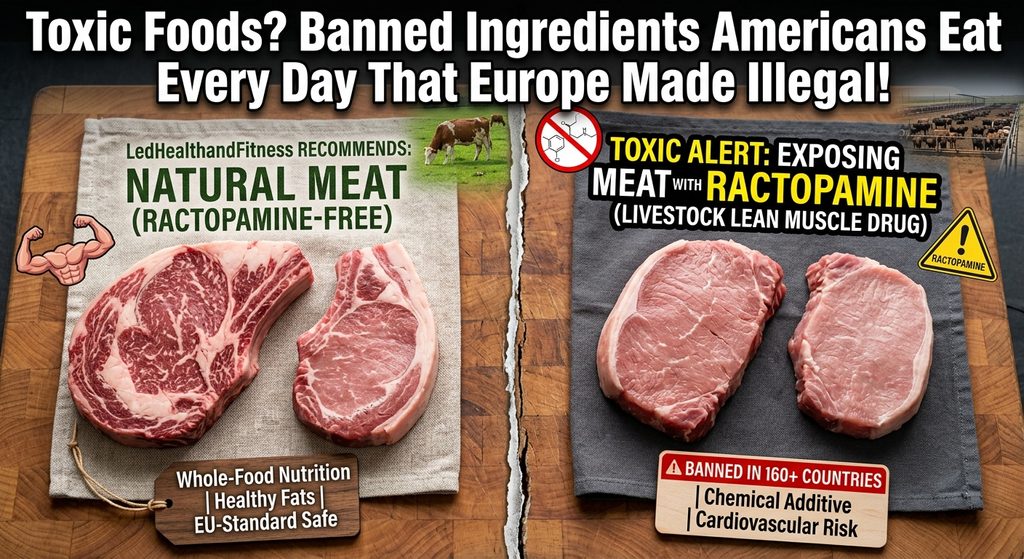
8. Ractopamine (Livestock Lean Muscle Drug)
- What It Is: A pharmaceutical feed additive given to pigs, cattle, and turkeys shortly before slaughter to stimulate rapid muscle growth and cut body fat.
- Where It’s Hidden: Conventionally raised, non-organic pork and beef products.
- Why Europe Banned It: Linked to cardiovascular stress, elevated heart rates, and hyperactivity in animals, with insufficient human trials demonstrating long-term safety for meat consumers.
- Current Status: Banned or restricted in over 160 countries, including the entire EU, China, and Russia.
EU vs. US Food Additives Comparison
+------------------------+---------------------------------------+----------------------------------+
| Ingredient / Additive  | Common US Foods                       | EU Regulatory Status             |
+------------------------+---------------------------------------+----------------------------------+
| Potassium Bromate      | Sliced bread, rolls, pizza dough      | BANNED (Carcinogen Risk)         |
| Azodicarbonamide (ADA) | Fast-food buns, packaged tortillas    | BANNED (Respiratory/Cancer Risk) |
| Titanium Dioxide       | Powdered donuts, candy, creamers      | BANNED (Genotoxicity Risk)       |
| BHA & BHT              | Cereals, potato chips, chewing gum    | STRICTLY BANNED / RESTRICTED     |
| Red 40 & Yellow 5/6    | Candy, sodas, sports drinks           | MANDATORY WARNING LABEL          |
| Propylparaben          | Tortillas, snack cakes, bakery goods  | BANNED (Hormone Disruptor)       |
+------------------------+---------------------------------------+----------------------------------+
How to Audit Your Pantry: A Quick Label-Reading Guide
To minimize your daily intake of these synthetic chemicals and preservatives, make a habit of checking the ingredient deck on packaged products:
- Look for Clean Flour: Choose breads made with “Unbleached Organic Flour” or “100% Whole Wheat” and verify that Potassium Bromate or Azodicarbonamide are not listed.
- Avoid Synthetic Dyes: Opt for snacks colored naturally with fruit or vegetable juices (e.g., elderberry, purple carrot, turmeric) rather than Red 40, Yellow 5, or Yellow 6.
- Choose Real Antioxidants: Avoid processed fats preserved with BHA, BHT, or Propylparaben. Look for natural preservatives like Tocopherols (Vitamin E) or Rosemary Extract.
- Prioritize Whole Foods: The most effective way to eliminate banned additives is to base your diet on single-ingredient, unrefined whole foods—fresh vegetables, whole grains, grass-fed meats, and fresh fruits.
Conclusion
The presence of food additives banned in the EU across standard American grocery stores is a stark reminder that package marketing does not equal health protection. Navigating modern nutrition requires taking ownership of what you put into your body.
At LedHealthandFitness, we advocate for transparent, whole-food nutrition that supports long-term health, hormone balance, and physical performance. Turn the package over, read the label, and feed your body real food.
What do you feel about this post?

Like

Love

Happy

Haha

Sad